Hot Bath Dyeing vs. Cold Dyeing: What’s the Difference?
Hot bath dyeing and cold dyeing can both produce beautiful color, but they rely on different chemistry, temperatures, fibers, and dye classes. Choosing the right method helps you get stronger color, better washfastness, and more predictable results.
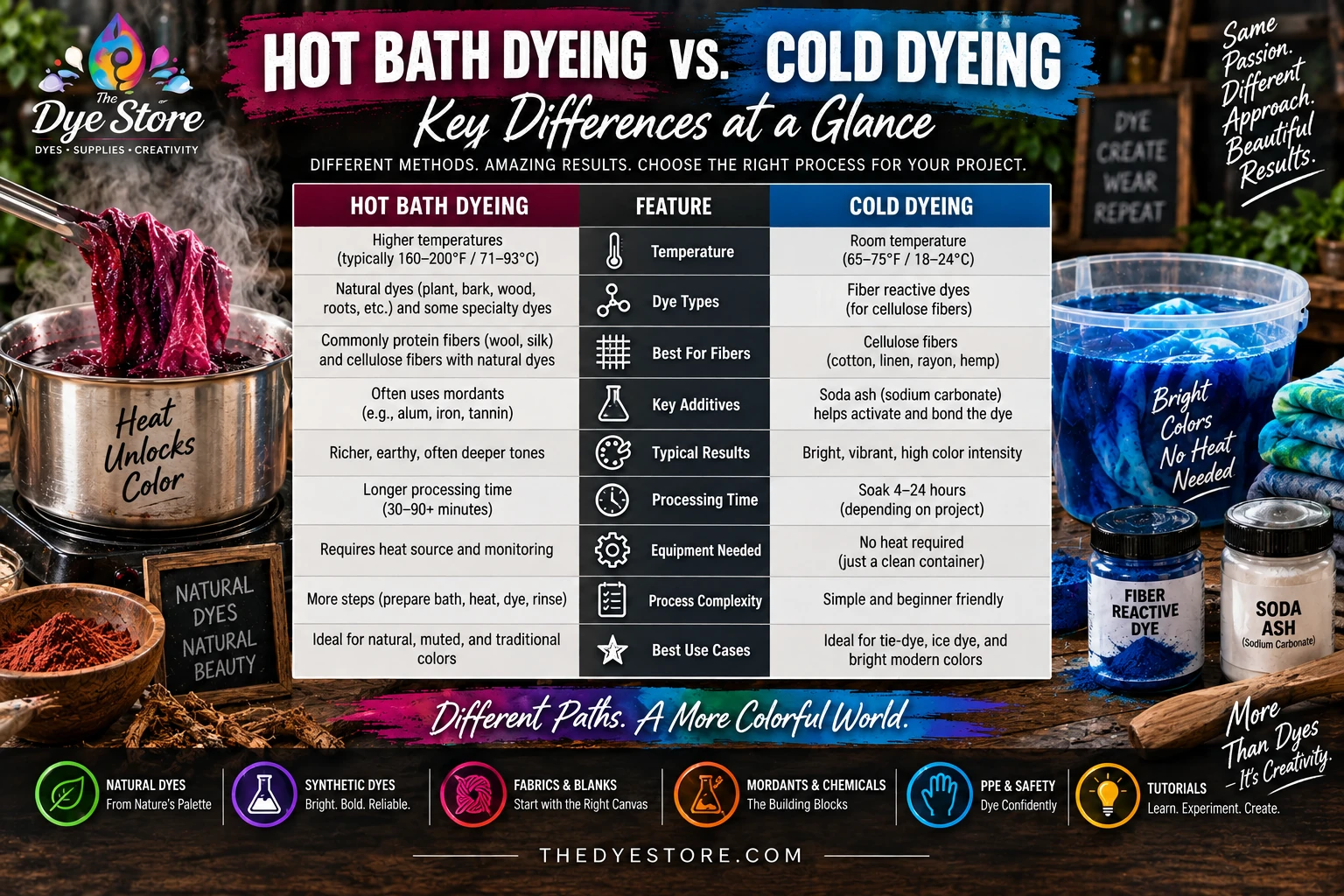
Hot Bath Dyeing vs. Cold Dyeing at a Glance
| Method | Best suited for | Typical temperature | Main advantage |
|---|---|---|---|
| Hot bath dyeing | Many natural dyes, acid dyes, some direct dyes | Warm to simmering, depending on dye and fiber | Heat helps extraction, penetration, and fixation |
| Cold dyeing | Many fiber-reactive processes on cellulose fibers | Room temperature to warm | Excellent color with less heat and easy batch methods |
What Is Hot Bath Dyeing?
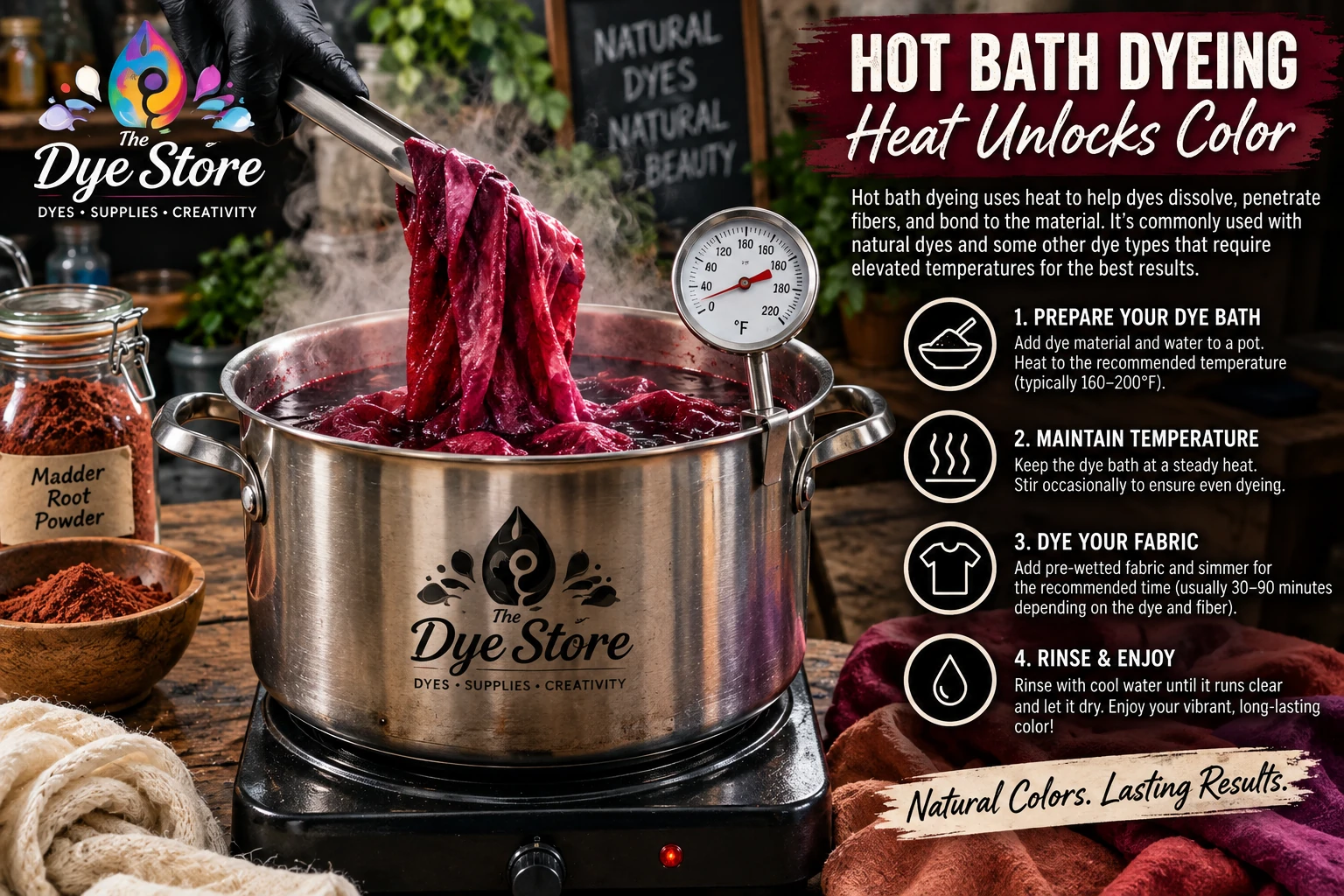
Hot bath dyeing uses a heated dye bath to help move color into the fiber and, depending on the dye system, support extraction and fixation. It is especially common with many natural dyes and with dye classes that are designed to work on protein fibers such as wool and silk.
In natural dyeing, heat can help pull color compounds from plant material and encourage more even contact between the dissolved color and the textile. Mordants may also be used depending on the dye and fiber. Always follow the instructions for the specific natural dye and mordant you are using.
Advantages of hot bath dyeing
- Useful for many natural-dye processes.
- Heat can improve extraction and penetration.
- Good control over immersion dyeing and even color.
- Works well with dye systems designed for heated baths.
Things to watch for
- Too much heat can damage some fibers.
- Rapid heating or agitation can felt wool.
- Some colors shift when overheated.
- You need heat-safe equipment reserved for dye work.
What Is Cold Dyeing?
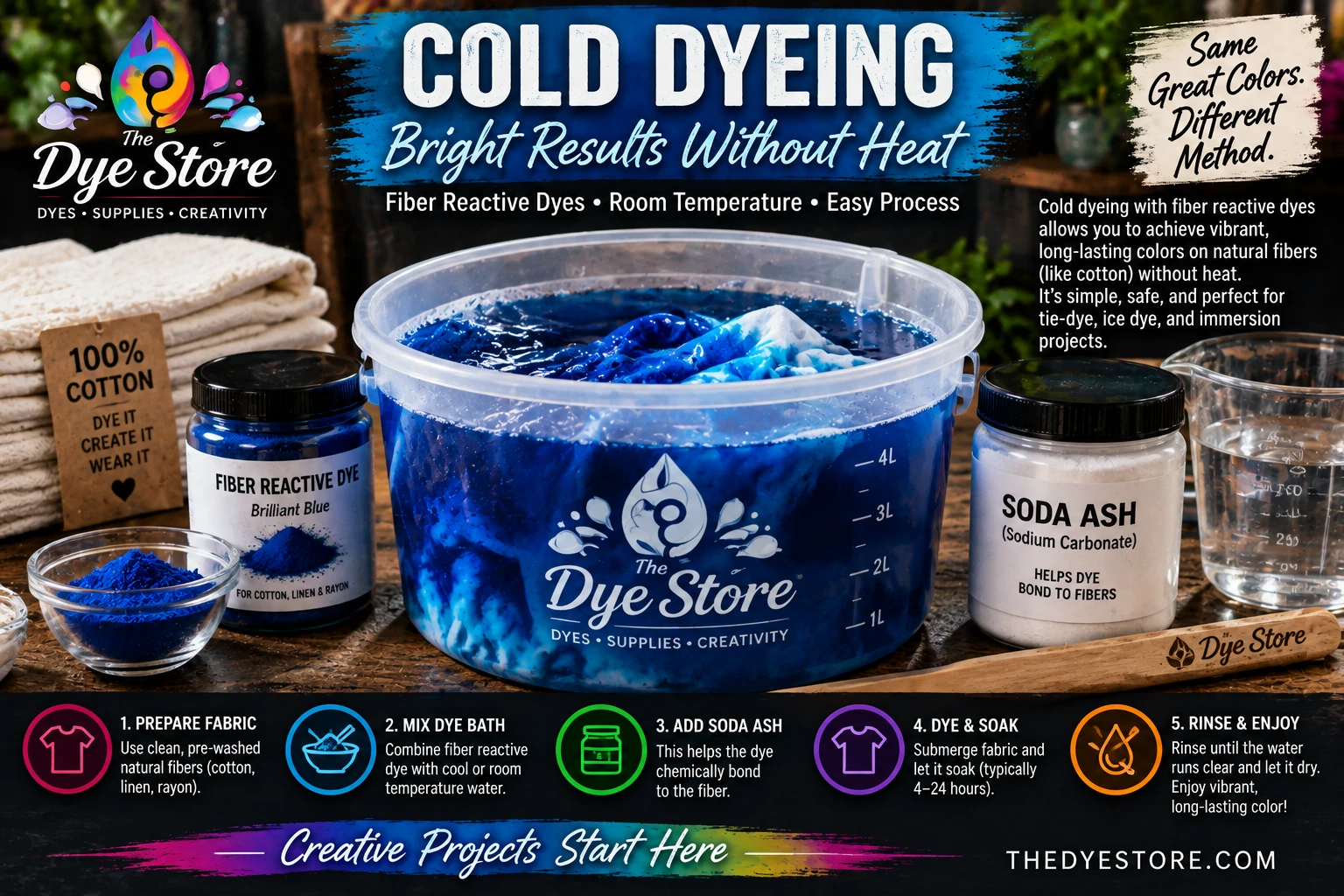
Cold dyeing generally refers to dye processes that do not require a hot simmering bath. Many fiber-reactive dyes are designed to form a strong chemical bond with cellulose fibers such as cotton, rayon, and linen under alkaline conditions. Soda ash is commonly used to create the alkaline environment needed for fixation.
“Cold” does not always mean icy water. Most fiber-reactive dyes perform best within a suitable room-temperature or warm range, and very cold conditions can slow the reaction. Always follow the recommended temperature range for the specific dye.
Advantages of cold dyeing
- Excellent choice for cotton and other cellulose fibers with fiber-reactive dyes.
- Uses less energy than a heated bath.
- Well suited to tie-dye, ice-dye, low-water immersion, and batch methods.
- Can produce very bright, saturated colors.
Things to watch for
- Temperature that is too low can slow fixation.
- Incorrect soda-ash concentration can reduce color yield.
- Different fiber-reactive colors can have different temperature preferences.
- Rinsing and washing are important for removing unfixed dye.
Which Method Should You Choose?
The best method depends first on the fiber and the dye class—not simply on whether you prefer to work hot or cold.
- Cotton, rayon, linen: fiber-reactive dyes are a strong choice for room-temperature or warm batch dyeing.
- Wool and silk: many acid-dye systems use controlled heat, while natural-dye methods often use warm or heated baths.
- Natural dyes: many recipes use heat for extraction and dyeing, although exact temperatures vary by plant material and fiber.
- Tie-dye and ice-dye projects: fiber-reactive dyeing is usually the most practical approach for cellulose fabrics.
Simple Hot Bath Workflow
- Identify your fiber and choose a compatible dye.
- Pre-wash the fabric to remove finishes and oils.
- Prepare any mordant or pretreatment required by the dye system.
- Prepare the dye bath according to the product instructions.
- Wet the fabric thoroughly before adding it to the bath.
- Raise the temperature gradually and maintain the recommended range.
- Move the fabric gently for even coverage.
- Allow the fabric to cool before rinsing when appropriate.
- Rinse and wash according to the dye instructions.
Simple Cold Fiber-Reactive Workflow
- Start with clean cotton, rayon, linen, or another compatible cellulose fiber.
- Prepare the fiber-reactive dye according to the manufacturer’s directions.
- Apply or immerse the dye using your chosen technique.
- Use soda ash according to the dyeing method so the dye can bond with the fiber.
- Keep the project within the recommended temperature range while it batches.
- Give the dye enough time to react before rinsing.
- Rinse progressively until excess dye is removed, then wash thoroughly.
Can You Use the Same Dye for Both Methods?
Sometimes, but not always. Dye classes are formulated for specific fibers and chemical conditions. A dye designed for cellulose fibers may not behave correctly on wool, and a dye intended for protein fibers may require heat and an acidic bath. The most important step is matching the dye class to the fiber.
Common Mistakes
- Choosing the dye before identifying the fiber.
- Assuming hotter always means better color.
- Using water that is too cold for efficient fiber-reactive fixation.
- Skipping scouring or pre-washing.
- Using the wrong mordant, alkali, acid, or concentration.
- Rushing the rinse and washout stage.
Safety
Wear appropriate gloves and eye protection, avoid breathing dye powders, and work in a well-ventilated area. Use dedicated dyeing utensils and containers rather than cookware intended for food. Follow the safety information supplied with each dye, mordant, and auxiliary chemical.
Explore our natural dyes, fiber-reactive dyes, mordants, and PPE & safety supplies for your next project.
Frequently Asked Questions
Does hot water make every dye work better?
No. Some dye systems need heat, while others are designed for room-temperature or warm fixation. Excessive heat can reduce control or damage certain fibers.
Is cold dyeing really cold?
Not necessarily. In many cases it means no heated dye bath. Room-temperature or mildly warm conditions are common.
Which method is best for cotton?
Fiber-reactive dyeing is one of the most effective methods for cotton because the dye can chemically bond with cellulose under alkaline conditions.
Which method is best for natural dyes?
Many natural-dye recipes use a heated bath, but temperature requirements vary widely by dye source, mordant, and fiber.
Not for human or animal consumption.