Natural Dyes vs. Textile Reactive Dyes: Earthy Beauty vs. Vibrant Color
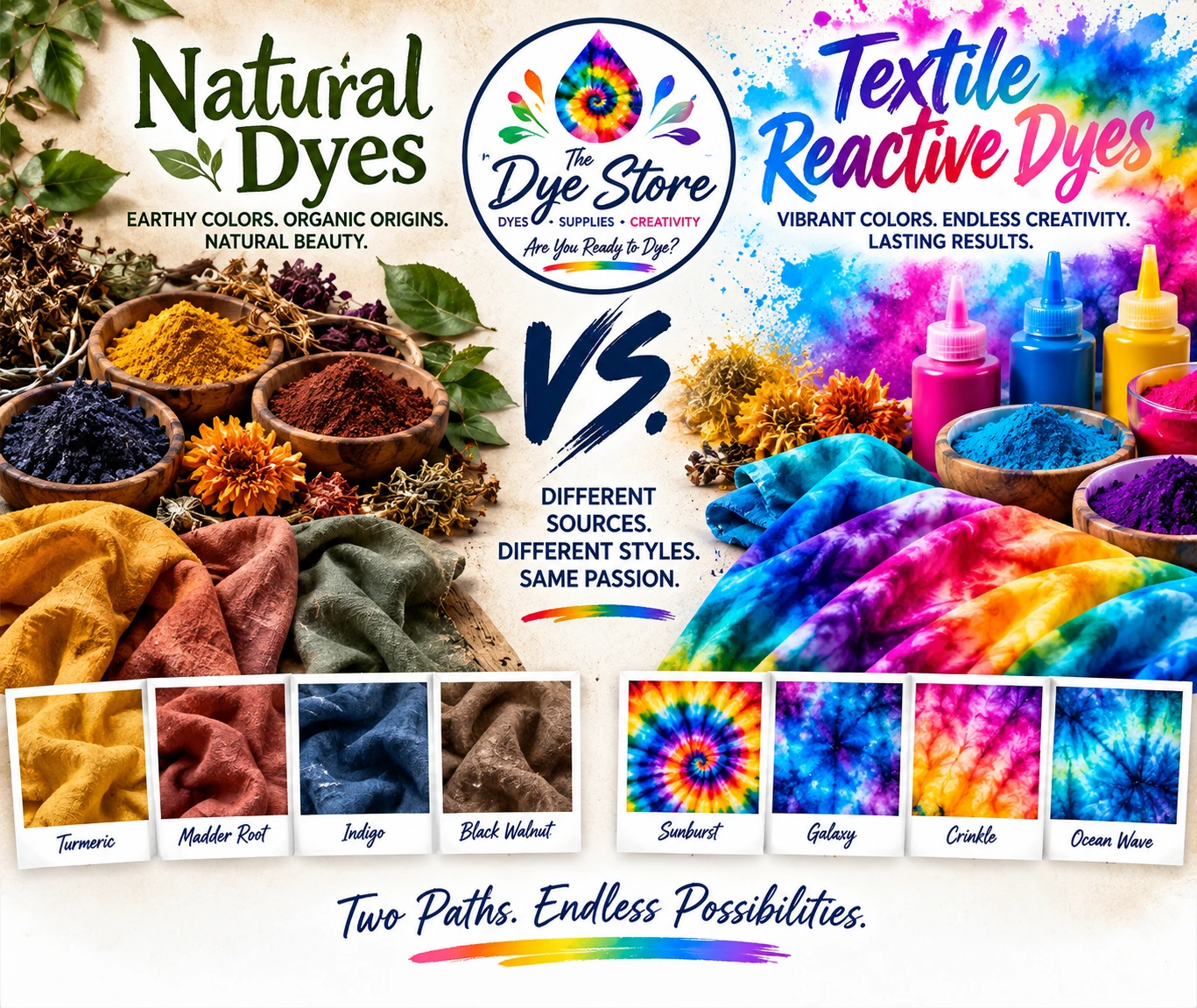
Color can tell a completely different story depending on the dye you choose. Natural dyes are known for earthy, organic-looking shades and beautiful variation, while textile reactive dyes are known for bold, vibrant color and a huge range of creative possibilities.
Neither approach has to replace the other. They create different aesthetics, use different processes, and each brings its own character to textile work. Here is a simple comparison to help you decide which direction fits your next project.
Natural Dyes: Earthy, Organic Color
Natural dyes are derived from plant and other naturally occurring dye sources. Materials such as turmeric, madder root, black walnut and indigo can produce colors that feel connected to nature: warm golds, rusts, browns, muted greens, reds and distinctive blues.
Part of their appeal is natural variation. The exact shade can change with the fiber, dye concentration, water chemistry, mordant or fixative, temperature and process. That variability can give naturally dyed fabric an individual, handcrafted appearance that is difficult to duplicate exactly.
What makes natural dyes unique?
- Earthy and nature-inspired color palettes
- Beautiful tonal variation from project to project
- A connection to traditional textile-dyeing methods
- Excellent for makers who enjoy experimentation and process
- Distinctive results that can feel organic and one-of-a-kind
Textile Reactive Dyes: Bright, Vibrant Color
Textile reactive dyes—often called fiber-reactive dyes—take color in a very different direction. They are especially popular for cellulose fibers such as cotton because they can produce brilliant, saturated colors and, when used correctly, form strong chemical bonds with the fiber.
This is the world of electric blues, vivid pinks, intense purples, brilliant oranges and high-impact color combinations. They are a natural choice for tie-dye, ice-dye and other projects where bright color and creative effects are the goal.
What makes textile reactive dyes unique?
- Bright, saturated and vibrant colors
- A broad range of shades and color combinations
- Excellent potential for tie-dye and ice-dye effects
- Strong affinity for compatible cellulose fibers when properly processed
- Great for bold patterns, gradients, color splitting and experimentation
Earthy vs. Vibrant: Two Different Color Stories
The easiest way to understand the difference is through the finished look. Natural dyes often create a softer, grounded palette that feels botanical, traditional and organic. Textile reactive dyes generally deliver stronger saturation and a more vivid, contemporary appearance.
That difference is exactly why both belong in a creative dye studio. A naturally dyed madder or black-walnut piece can have a subtle character all its own, while a fiber-reactive tie-dye shirt can explode with brilliant color. Different sources. Different styles. Same creativity.
Which Type of Dye Should You Choose?
Choose natural dyes when you are drawn to earthy tones, traditional processes and natural variation. Choose textile reactive dyes when your project calls for vivid color, high-impact patterns or techniques such as tie-dye and ice-dye.
There is also no reason to limit your creativity to one category. Learning both gives you a much wider color vocabulary and helps you understand how different dye systems interact with textiles.
Shop the Supplies for This Tutorial
Explore the dye styles and supplies discussed above.
Two paths. Endless possibilities.
Dye powders and related chemical products are not for human or animal consumption. Follow product instructions and appropriate handling precautions.