 The Dye StoreNatural color. Creative possibilities.
Dyes and chemical products are not for human or animal consumption
The Dye StoreNatural color. Creative possibilities.Dyes and chemical products are not for human or animal consumption
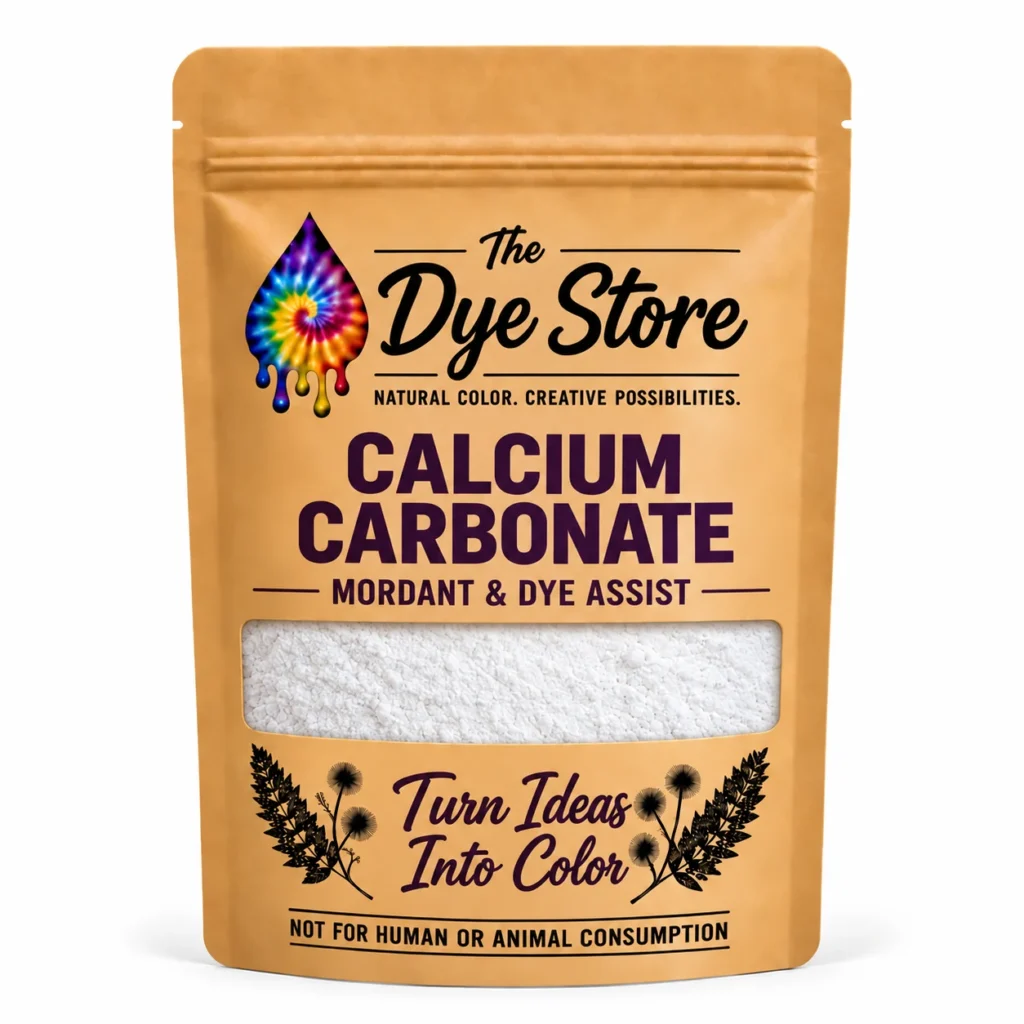
A dyeing additive used to adjust water hardness and shift dye results.
Select package size
In stock · ships in 1–2 business days
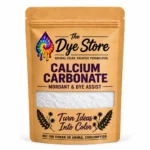
Calcium Carbonate is a mordant or dye-assist material used in textile dyeing to help control the conditions in which color develops. Calcium Carbonate for dyeing adjusts water hardness and can influence the way selected natural dyes develop on fiber. For dyers working with natural dyes, fiber reactive dyes or both, understanding the role of preparation chemistry can make results easier to reproduce from one project to the next.
Natural dye results can change with mineral content and water chemistry. Calcium carbonate is useful when a harder-water environment is desired and is especially relevant to madder work, where calcium-rich conditions can support warmer brick-red development. Fiber type, water chemistry, dye material, concentration and processing method all influence the finished result, so Calcium Carbonate for dyeing should be used as part of a measured dye recipe rather than added without a plan.
For repeatable textile work, weigh the dry fiber and keep notes on the amount of dye, mordant or dye assist used. Thoroughly dissolve or disperse the material as appropriate for the chosen process, and test a small sample when working with a new fiber or color combination. Calcium Carbonate for dyeing can be especially useful for dyers who want greater control over shade development while learning how preparation changes botanical and fiber-reactive color.
Calcium Carbonate is available in 50 g, 100 g and 250 g sizes for sampling, individual projects and larger dye sessions. Use the links below to explore dyes and related materials that fit naturally into the same workflow, or browse the complete Mordants & Fixatives collection for additional preparation options.
Useful with Calcium Carbonate:
Madder Root Powder Natural Dyes Shop Mordants & Fixatives Dyeing Tutorials
Safety: Avoid breathing powders and use appropriate gloves, eye protection and other protective equipment when handling dyeing chemicals. Follow the directions for your chosen process. Not intended for human or animal consumption.
First identify the role of this material in your complete dyeing method. Alum, iron, cream of tartar, calcium carbonate and soda ash have different purposes and are not interchangeable fixatives. Measure the amount specified for your fiber, dye and process, use dedicated tools, and test a small swatch before scaling up.
No. Select the chemical specified by your method. A mordant, dye activator, tannin treatment and water-chemistry adjustment serve different roles.
Use the quantities in a complete method for the specific material and fiber. A package size is not a universal dyeing recipe.
Read the product label and safety data sheet. Select gloves, eye protection, ventilation and any respiratory protection specified for the material and task. Avoid creating airborne powder, use dedicated equipment, and keep materials away from children, pets and food. Store sealed, dry and according to the product instructions. Not intended for human or animal consumption.
Goes well with
Create your free account and we will email you a 10% off first-order coupon.
Create My AccountOne offer per customer. First purchase only.