 The Dye StoreNatural color. Creative possibilities.
Dyes and chemical products are not for human or animal consumption
The Dye StoreNatural color. Creative possibilities.Dyes and chemical products are not for human or animal consumption
Sale: Save $5 on every size — no code needed.
| Size | Original price | Sale price |
|---|---|---|
| 50 g | $19.99 | |
| 100 g | $34.99 | |
| 250 g | $84.99 | |
| 500 g | $160.00 | |
| 1 kg | $300.00 |
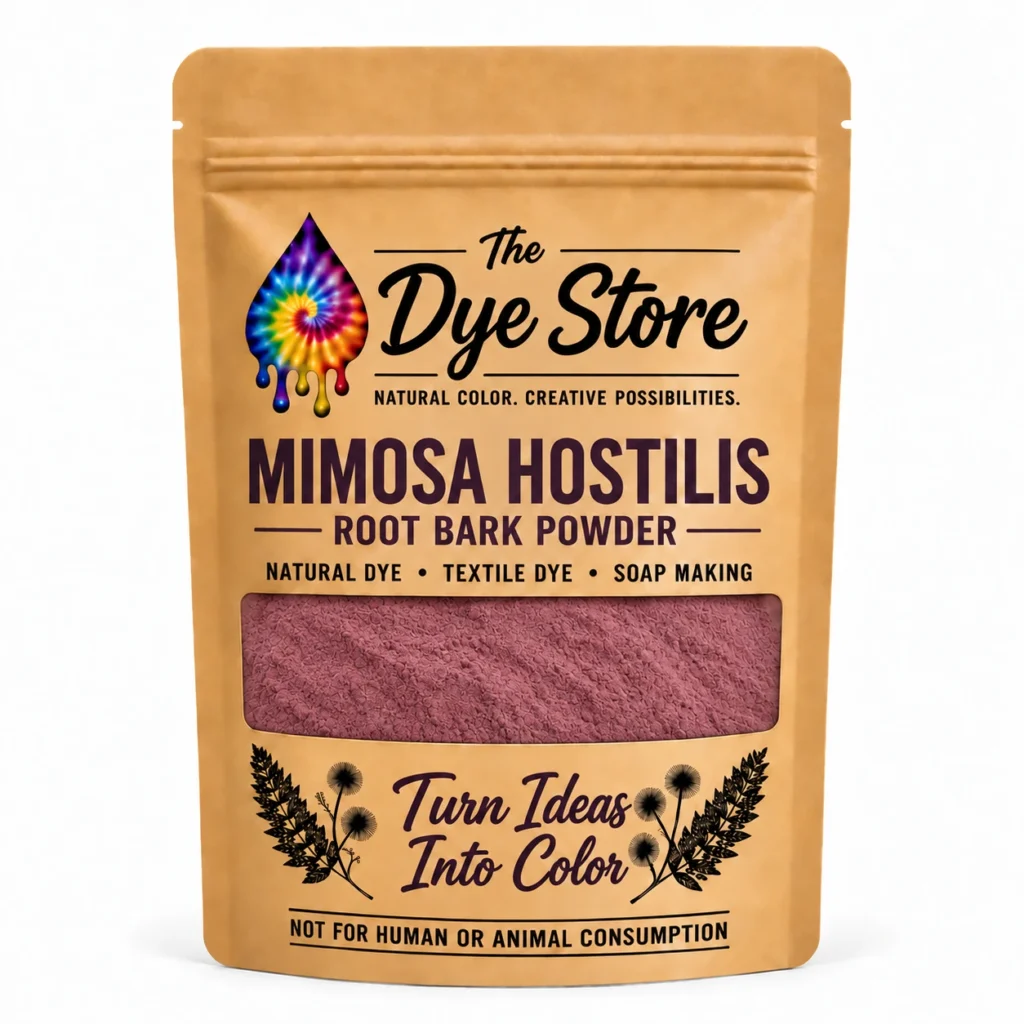
Brazilian Mimosa Hostilis inner root bark powder (Mimosa tenuiflora), finely milled and sifted for natural textile dyeing, fiber arts and botanical craft applications. Inner root bark only. Not for human or animal consumption.
Select package size
In stock · ships in 1–2 business days
Mimosa Hostilis inner root bark powder (MHRB) is finely milled Brazilian botanical material from Mimosa tenuiflora, widely known as Mimosa Hostilis. This inner root bark powder is offered for natural textile dyeing, fiber arts and botanical craft applications. It can produce earthy reds, reddish browns and burgundy-inspired tones, with results varying according to fiber preparation, concentration, water chemistry, mordant and dyeing method.
Our Brazilian Mimosa Hostilis inner root bark is supplied as a convenient powder for makers working with cotton, linen, silk, wool and other natural fibers. Because botanical color varies naturally, testing a small swatch before a larger project is recommended. Thorough scouring helps prepare the fiber, while alum can be used as a mordant when appropriate for the chosen material and process.
Mimosa tenuiflora is the botanical name associated with the material also widely known as Mimosa Hostilis root bark. Keeping notes on fiber weight, powder quantity, preparation, temperature and processing time can make later dye sessions easier to compare and reproduce.
Mimosa Hostilis inner root bark powder can develop earthy red, reddish-brown and burgundy-inspired color on suitable natural fibers. Lighter or deeper results can be explored by adjusting the amount of Mimosa Hostilis inner root bark powder relative to the dry fiber weight and by changing preparation and processing conditions. The product is intended for traditional and experimental textile dyeing and botanical craft projects.
Choose 50 g, 100 g, 250 g, 500 g or 1 kg of Brazilian inner root bark powder for sampling, individual projects or larger dye sessions. The powder format makes the material easy to measure for controlled textile experiments. For complementary botanical colors, compare Madder Root and Black Walnut Hull or browse the complete Natural Dyes collection.
Explore Natural Dyes:
Madder Root Black Walnut Hull Shop All Natural Dyes Mimosa Cotton & Linen Dyeing Guide
Safety: Avoid breathing loose powder and use appropriate protective equipment when handling dye materials. Follow the directions for your chosen textile-dyeing method. Not intended for human or animal consumption.
No. The dye material and fiber determine the preparation. Follow a complete method rather than adding a mordant automatically.
Colors are approximate. Fiber, preparation, concentration, water chemistry and processing affect the final result, so test a swatch first.
Read the product label and safety data sheet. Select gloves, eye protection, ventilation and any respiratory protection specified for the material and task. Avoid creating airborne powder, use dedicated equipment, and keep materials away from children, pets and food. Store sealed, dry and according to the product instructions. Not intended for human or animal consumption.
Goes well with
Create your free account and we will email you a 10% off first-order coupon.
Create My AccountOne offer per customer. First purchase only.